Everyone Wants a Healthy Body. Few People Want a Healthy Life.
Jun 30, 2026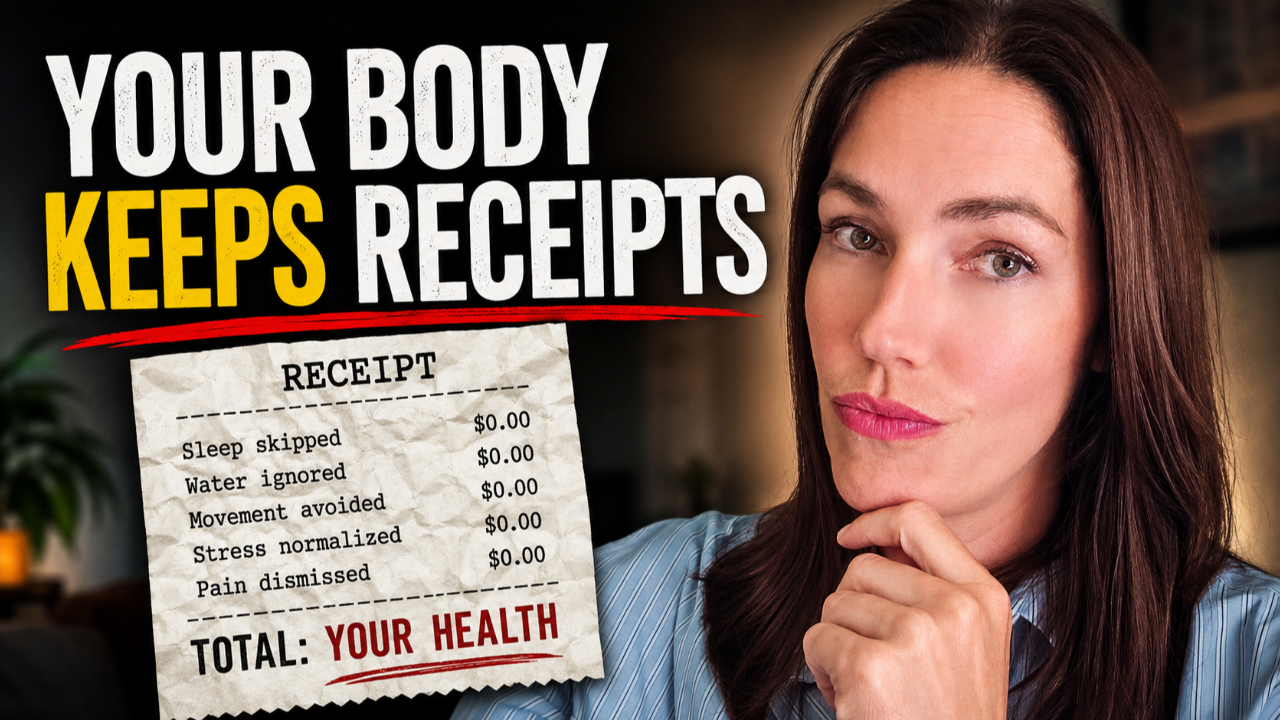
Most people want a healthy body in the same way they want a clean house after ignoring the dishes for three weeks.
They want the result. They want the relief. They want the body to cooperate. They want to wake up with energy, move without pain, digest without drama, sleep through the night, feel attractive, stay strong, age well, and have their body quietly perform like a loyal employee who never complains, never calls in sick, and somehow keeps everything running despite years of questionable management.
But they do not always want the daily participation required to create that result.
That may sound harsh, but it is not meant to be cruel. It is meant to be honest. And honestly, I do not think laziness is the real problem. “People are lazy” is too easy, too flat, and not even accurate enough to be useful. Many people are exhausted. Many are overwhelmed. Many are under-supported, overworked, dysregulated, under-slept, emotionally fried, financially stressed, and confused by the fifty-seven conflicting opinions they have heard about health before breakfast. We also live in systems that make healthy choices harder than they should be. Cheap food is often processed. Rest is treated like weakness. Stress is normalized. Productivity is worshipped. Medical care often intervenes after problems become severe instead of helping people build the kind of life that prevents decline in the first place.
All of that is real.
And also, personal responsibility is real.
Both things can be true. Your life may be hard, your nervous system may be tired, the modern world may be absurd, and your choices still matter. The food still matters. The sleep still matters. The alcohol still matters. The movement still matters. The stress patterns still matter. The way you speak to yourself still matters. The way you avoid discomfort still matters. The way you wait until your body is screaming before you listen still matters.
Everyone wants their body to be healthy, pain-free, energized, strong, attractive, resilient, and cooperative. Of course they do. Who wouldn’t? But many people are not willing to build the kind of life that allows the body to become those things. They want health as an outcome, but they resist health as a lifestyle. They want the body to feel better, but they keep living in ways that ask the body to absorb the consequences.
And eventually, the body sends the invoice.
As a practitioner, I see this tension all the time. People want less pain, better energy, deeper sleep, better digestion, fewer symptoms, improved mobility, and a nervous system that does not feel like it is being chased by invisible wolves every day. That desire is reasonable. I want that for them too. But sometimes, when the conversation turns toward food, hydration, movement, alcohol, stress, rest, boundaries, consistency, or recovery, there is resistance. Not always because they do not care, but because those are the parts that require participation.
It is much easier to want a treatment than to change a pattern.
And I say that as someone who loves treatment. I believe deeply in acupuncture. I believe in massage. I believe in bodywork, nervous system support, nutrition, movement, sleep, and all the tools that help the body heal. Treatment can be powerful. It can reduce pain, calm the nervous system, improve circulation, support recovery, release tension, and remind the body that it is capable of feeling better. But healing is not something done to you while you remain completely uninvolved in the conditions that created the problem.
Healing is something you participate in.
A treatment can open the door. Your habits determine whether you walk through it.
This is where people sometimes get uncomfortable, because we like the version of health that feels passive. We like the idea that someone else can fix it. Adjust it. Needle it. Massage it. Supplement it. Medicate it. Stretch it. Crack it. Detox it. Smoothie it. Biohack it. Sprinkle magnesium on it and hope for the best. And sometimes those things help. But if the larger life keeps producing the same stress, inflammation, stagnation, depletion, and overload, then the body is not failing. It is adapting.
Your body is not failing you. It is responding to the life you keep asking it to survive.
That is the part we have to be willing to look at. Not with shame. Shame rarely creates sustainable change. Shame usually just makes people hide, spiral, or perform wellness in public while continuing to abandon themselves in private. But we do need honesty. Clear honesty. The kind that says, “I cannot keep asking my body for health while refusing to give it the conditions health requires.”
Because it still takes time and energy to live in a way that makes you sick. That is the part people often overlook. Poor habits are not free. They cost something too. It takes time to stop for fast food. It takes money to buy soda, alcohol, cigarettes, convenience snacks, and all the little “treats” that quietly become a lifestyle. It takes energy to stay up too late, scroll too long, avoid movement, ignore pain, suppress emotions, overwork, overcommit, and then try to survive the next day on caffeine and denial. It takes effort to maintain dysfunction. It just often feels familiar enough that we stop calling it effort.
An unhealthy life still has routines. They are just routines with worse outcomes.
This is not about perfection. I am not suggesting everyone needs to become a monk who meal preps lentils by candlelight and whispers affirmations to their adrenal glands. I am not interested in turning health into another moral performance. You are allowed to enjoy your life. You are allowed to have dessert. You are allowed to rest. You are allowed to have seasons where survival is the best you can do. But if your daily habits consistently create pain, fatigue, inflammation, anxiety, poor sleep, digestive problems, and a body that feels trapped, then at some point we have to stop acting shocked when the body reflects the life it is living.
The body keeps receipts.
The body remembers the sleep you skipped, the water you did not drink, the movement you avoided, the meals that did not nourish you, the stress you normalized, the boundaries you refused to set, the alcohol you called “taking the edge off,” and the pain you kept bargaining with until it became impossible to ignore. Again, this is not about blame. It is about cause and effect. And cause and effect does not disappear because we feel personally attacked by it.
Freedom does not mean doing whatever you want and expecting your body to absorb the consequences forever. That is not freedom. That is entitlement with a wellness vocabulary. Real freedom means having enough self-respect to make choices that give you more life, not less.
Health freedom is not about restriction for the sake of restriction. It is not about becoming rigid, joyless, obsessive, or afraid of every ingredient you cannot pronounce. Health freedom means being able to participate in your own life. It means having the energy to travel, climb stairs, garden, dance, work, think clearly, recover from stress, play with your kids, walk through a new city, build something meaningful, and still feel like there is enough of you left at the end of the day to enjoy being alive.
That kind of freedom requires maintenance.
And this is where many people get offended, because maintenance is not glamorous. Maintenance is boring. Maintenance is drinking water, going to bed, moving your body, eating vegetables, taking a walk, doing your exercises, reducing the habits that inflame you, and making the less dramatic choice over and over again. Maintenance is not always Instagrammable. No one claps because you went to bed on time. There is no standing ovation for stretching your hips after sitting all day. Nobody throws a parade because you chose a nourishing dinner instead of eating crackers over the sink while emotionally negotiating with your entire existence.
But those choices matter.
They are the quiet architecture of health.
This is one of the reasons I care so much about healthy habits. Not because habits are trendy. Not because I think discipline is the answer to every human struggle. Not because I want people to optimize themselves into exhaustion. I care because the body cannot be separated from the life it lives every day. Your body is not some random machine that breaks down independent of your choices, your stress, your relationships, your sleep, your food, your movement, and your emotional life. It is responding to all of it.
That is why the work has to be realistic. It has to be compassionate enough to account for stress and strong enough to require honesty. If someone is exhausted and overwhelmed, telling them to simply “try harder” is useless. But telling them their choices do not matter is also useless. The middle path is where change actually happens. We have to ask: what is the smallest honest thing you are willing to do consistently? What is the pattern you already know is costing you? What is one choice that would give your body more support instead of asking it to survive another day of neglect?
Your body is not asking for perfection. It is asking for participation.
Participation can be small. It can be a ten-minute walk. It can be one glass of water before coffee. It can be eating something green. It can be stretching before bed. It can be choosing not to drink tonight. It can be taking your pain seriously before it becomes a crisis. It can be admitting that your stress is not “just stress” anymore. It can be getting help. It can be resting before your body forces rest on you in a far less convenient way.
The problem is not that health requires some impossible level of discipline. The problem is that many people are waiting for motivation, crisis, or fear to do what self-respect could start doing now.
And no, you do not need a whole new life by next Monday. That is usually where people sabotage themselves. They realize something needs to change, so naturally they create a plan that requires a new personality, a private chef, a sunrise routine, emotional enlightenment, and a calendar with no surprises. Then real life shows up and the whole thing collapses by Wednesday. That is not failure. That is poor design.
Healthy change has to fit the life you actually live. But it also has to change the life you actually live.
That is the uncomfortable truth. You cannot keep everything exactly the same and expect your body to produce a different outcome. You cannot live on four hours of sleep, skip meals, drink soda all day, avoid movement, ignore stress, overwork, under-recover, and then act betrayed when your body does not feel vibrant. Your body is not being dramatic. It is giving you feedback.
And feedback is useful if you stop treating it like an insult.
This is also why treatment works best when it becomes part of a larger commitment. Acupuncture can help calm the nervous system, reduce pain, and support the body’s ability to heal. Massage can soften guarding, improve mobility, and help release patterns of tension. Nutrition can reduce inflammation and provide the raw materials for repair. Movement can build strength, circulation, balance, and confidence. Rest can restore the system. But none of these are magic if someone keeps returning to the same habits that ask the body to stay inflamed, depleted, guarded, and overwhelmed.
You do not need to hate yourself into health. In fact, please do not. That usually backfires spectacularly and makes everyone involved miserable. But you do need to participate. You need to become someone your body can trust. Someone who listens before the whisper becomes a scream. Someone who understands that health is not something your body owes you while you ignore its needs.
Health is a relationship.
And relationships require participation.
That is the entire point. If you want your body to be strong, nourished, flexible, pain-free, energized, and resilient, you have to build a life that supports strength, nourishment, flexibility, recovery, energy, and resilience. Not perfectly. Not obsessively. Not all at once. But honestly.
Because everyone wants a healthy body.
Far fewer people are willing to build a healthy life.
So the question is not, “Do you want to feel better?” Of course you do. The question is:
Are you willing to participate in the health you keep asking your body to give you?
Keep moving, eat something green, and question anything that sounds like a quick fix.
Chow! Chow!