Most Body Problems Are Life Problems That Became Body Problems
Jul 21, 2026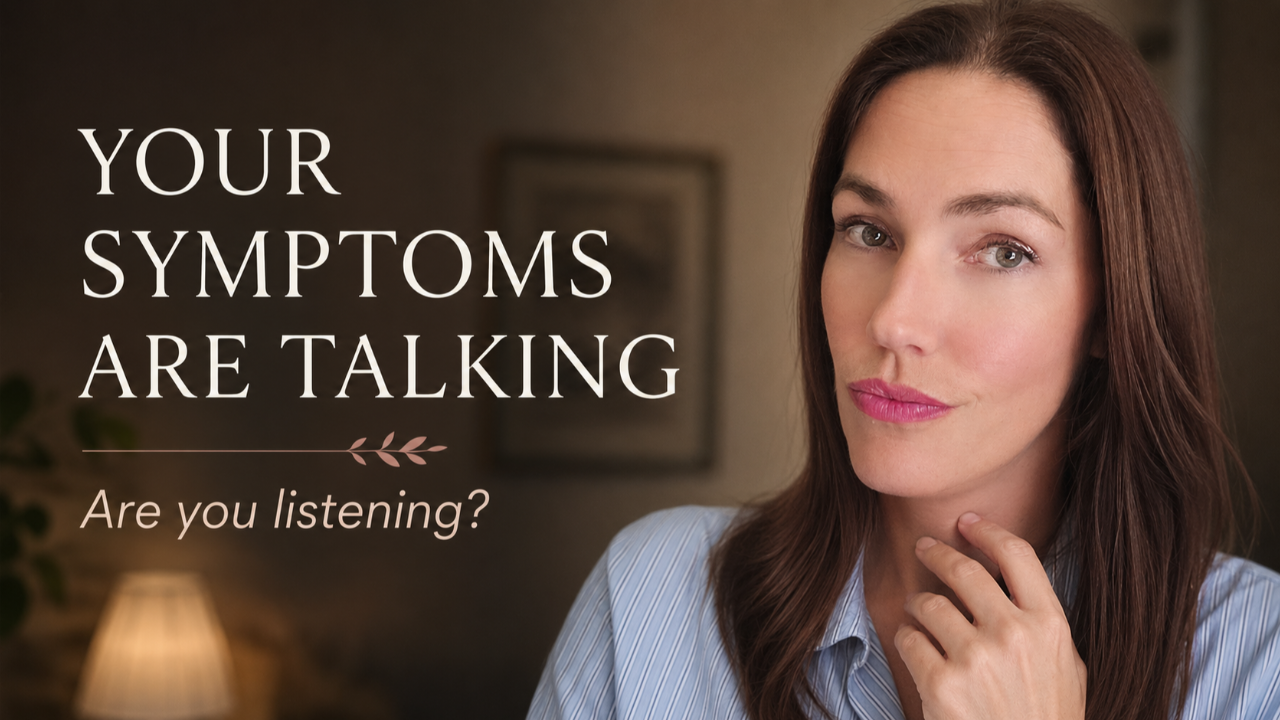
Your Body Is Not the Problem
Your body may not be betraying you. It may be telling the truth about the life it has been asked to survive.
I know that sounds strange at first, because most people are taught to think of symptoms as malfunctions. Pain means something is wrong. Fatigue means something is wrong. Anxiety means something is wrong. Digestive issues, inflammation, insomnia, cravings, tension, headaches, hormonal chaos, brain fog, and all the other ways the body gets loud must mean the body has become the problem.
And sometimes, of course, there is a clear medical issue that needs proper diagnosis and care. I am not suggesting people should spiritually journal their way through a serious condition while drinking tea and pretending bloodwork is a limiting belief. Please do not do that. Get the test. Talk to the practitioner. Use the medicine when it is needed. Be a person with a body in the real world.
But I do think we need to expand the conversation, because symptoms are not always random betrayals. Sometimes they are information. Sometimes the body is not malfunctioning; it is adapting. Sometimes the problem is not that your body is dramatic, weak, broken, or inconvenient. Sometimes the problem is that your life became unsustainable, and your body was the first thing honest enough to say so.
The body is constantly responding to its environment. It responds to sleep, food, stress, movement, sunlight, relationships, loneliness, work, fear, grief, pressure, toxins, noise, conflict, screens, habits, meaning, and emotional load. It responds to whether you feel safe. It responds to whether you ever rest. It responds to whether you have to stay alert all day, override your needs, suppress your anger, rush through meals, hold your breath, clench your jaw, skip water, live on caffeine, and pretend that “I’m fine” is a sustainable operating system.
Eventually, life problems become body problems.
That does not mean everything is “in your head.” It means your head is attached to your body, which apparently remains inconvenient for the modern wellness and medical industries. We love separating things into neat categories. Mental health over here. Physical health over there. Nutrition in this box. Exercise in that box. Stress as a vague background concept we all agree is bad but continue treating as unavoidable weather. Meanwhile, the body is trying to run one integrated system while we act shocked that chronic stress, poor sleep, loneliness, processed food, grief, inflammation, and overwork might all be sitting at the same table causing problems.
Your body is not a collection of unrelated parts. It is an ecosystem.
And ecosystems respond to conditions.
If the soil is depleted, the plant struggles. If the water is polluted, the fish suffer. If the weather becomes extreme, the forest changes. We understand this easily when we look at nature, but then we look at a human body living inside chronic stress, poor sleep, emotional isolation, constant stimulation, limited movement, processed food, financial pressure, and unresolved grief and say, “Why am I like this?”
Maybe the better question is: What is my body adapting to?
That question changes everything. “What is wrong with me?” often leads people into shame, fear, frustration, and self-attack. It makes the body feel like an enemy. It turns symptoms into evidence of personal failure. It creates the feeling that the body is something to control, silence, punish, or fix as quickly as possible so we can get back to living the same life that helped create the problem in the first place.
But “What is my body adapting to?” opens a door. It invites curiosity. It asks you to look at the whole picture. What has your body been carrying? What signals have you been ignoring? What patterns have become normal even though they are costing you? What environment are you living inside? What relationships drain you? What habits inflame you? What pace keeps you braced? What emotions have nowhere to go? What responsibilities keep asking you to override your own needs?
That is not blame. That is context.
And context matters.
This is where I want to be very clear: expanding the conversation does not remove personal responsibility. I am not interested in making people passive victims of their schedule, childhood, job, hormones, diagnosis, nervous system, or the fact that modern life sometimes feels like being chased by a bear while answering emails. Personal responsibility still matters. Your choices still matter. Your sleep still matters. Your food still matters. Your movement still matters. Your stress patterns still matter. The way you recover, communicate, rest, avoid, numb, nourish, and participate in your own healing still matters.
But responsibility without compassion becomes self-punishment. And compassion without responsibility becomes avoidance in a soft sweater.
We need both.
We need enough compassion to admit that many people are living inside systems that make health harder than it should be. People are overworked, under-rested, lonely, overstimulated, financially strained, surrounded by cheap processed food, disconnected from nature, and expected to keep functioning as if the human nervous system was designed for fluorescent lights, traffic, doom-scrolling, twelve browser tabs, and three sad desk meals a day. Of course bodies are struggling. This is not a personal weakness. It is a cultural design flaw with symptoms.
But we also need enough responsibility to admit that even inside imperfect systems, our choices matter. Maybe you cannot change everything overnight. Maybe you cannot quit the job, move to a walkable village, hire a chef, live near your entire chosen family, and become a peaceful forest creature by next Thursday. Fine. Most of us cannot. But you can usually change something. You can usually start listening sooner. You can usually ask, “What is one condition I keep forcing my body to adapt to that I could begin to change?”
That is where healing begins.
Not with shame. Not with denial. Not with pretending symptoms are meaningless. Not with blaming the body for being inconvenient. Healing begins when we stop asking, “How do I make this symptom shut up?” and start asking, “What is this symptom trying to tell me about the life I am living?”
Because symptoms are not always the enemy. Sometimes they are the messenger. Pain may be telling you that something needs attention. Fatigue may be telling you that your recovery is not matching your output. Cravings may be telling you that your body is undernourished, dysregulated, under-slept, or emotionally searching for relief. Anxiety may be telling you that your system has been living on high alert for too long. Inflammation may be telling you that something in your food, stress, environment, or lifestyle is keeping your body in defense mode. Insomnia may be telling you that your nervous system never received convincing evidence that the day is actually over.
This does not make the symptom fun. It does not make it convenient. It does not mean you should ignore medical care or skip proper treatment. But it does mean the body may be more intelligent than we give it credit for.
The body is always trying to protect you, even when its strategies become uncomfortable. Tension tries to brace. Fatigue tries to slow you down. Cravings try to get relief. Inflammation tries to defend. Anxiety tries to anticipate threat. Pain tries to get your attention. These responses can become excessive, disruptive, and painful, absolutely. But many of them began as adaptations. The body learned the life it was living and responded accordingly.
Your body is not broken. It may be over-adapted.
That is an important distinction. Broken implies useless. Over-adapted implies the body has been working very hard under difficult conditions, and now those conditions need to change. It means your body may have been doing its best to keep you functioning in a life that was asking too much and giving too little. It means the answer is not simply to silence the symptom, but to understand the system that produced it.
As a practitioner, I see this all the time. Someone comes in with pain, and yes, we treat the pain. Of course we do. Pain relief matters. But if they are sleeping four hours a night, living on caffeine, skipping meals, sitting all day, holding stress in their shoulders, never recovering, and calling that “just my life,” then the pain is not an isolated event. It is part of a bigger conversation.
Someone comes in exhausted, and they want energy. Understandable. But if every day is built on overcommitment, poor sleep, emotional labor, processed food, no boundaries, no sunlight, and no time when their nervous system is allowed to come down, then fatigue may not be the enemy. Fatigue may be the body refusing to keep pretending the math works.
Someone comes in anxious, and they want calm. Fair. But if they are consuming conflict, notifications, caffeine, uncertainty, people-pleasing, and self-abandonment all day long, then their nervous system may not be irrational. It may be accurately reporting that their life does not feel safe.
That is the part many people do not want to hear, but it is also the part that gives people power.
Because if your body is adapting to your life, then changing the inputs can change the outputs.
Sleep is an input. Food is an input. Movement is an input. Light is an input. Breath is an input. Relationships are inputs. Work is an input. Boundaries are inputs. Media is an input. Nature is an input. The pace of your life is an input. The emotional environment you live inside is an input. The way you speak to yourself is an input. The way you treat your body when it asks for attention is an input.
And your symptoms may be outputs.
Not always. Not perfectly. Human bodies are complicated, and anyone who tries to reduce all suffering to a neat little checklist is usually selling something. But often enough, the relationship is real. We cannot keep pretending the body exists separately from the life it lives every day.
This is also why quick fixes are so seductive. They let us treat the symptom without asking harder questions about the system. They let us believe we can supplement, stretch, needle, medicate, detox, adjust, or biohack our way around a life that is still producing the same overload. Sometimes those tools are helpful. I use some of them. I believe in treatment. I believe in support. I believe the body often needs help interrupting a pattern it cannot resolve on its own.
But if we only treat the symptom and never change the conditions, we end up managing the smoke while leaving the fire politely burning in the corner.
Healing requires a bigger conversation.
It asks: What is your body adapting to? What is your life asking of you? Where are you under-supported? Where are you overextended? Where are you using symptoms as proof that your body is the problem instead of asking what those symptoms may be revealing? Where do you need treatment, and where do you need change? Where do you need compassion, and where do you need to stop negotiating with patterns that keep making you sick?
That is not an easy conversation. But it is an honest one.
And honest is useful.
Because your body is not just something to drag through life until it cooperates. It is your constant companion. It is the place where your life is happening. It is the place where stress lands, joy expands, grief sits, love warms, fear tightens, food becomes fuel, sleep repairs, movement builds capacity, and every ignored truth eventually tries to find a voice.
Sometimes that voice is a symptom.
So before you call your body broken, ask what it has been asked to carry. Before you blame it for being tired, ask whether you have given it recovery. Before you call it dramatic, ask how long it has been whispering. Before you resent it for slowing you down, ask whether slowing down is exactly what it has been trying to make possible.
Your body may not be betraying you.
It may be telling the truth.
And maybe healing begins when you are finally willing to listen.
Keep moving, eat something green, and question anything that sounds like a quick fix.
Chow! Chow!