Your Body Can Remember How to Heal
Aug 04, 2026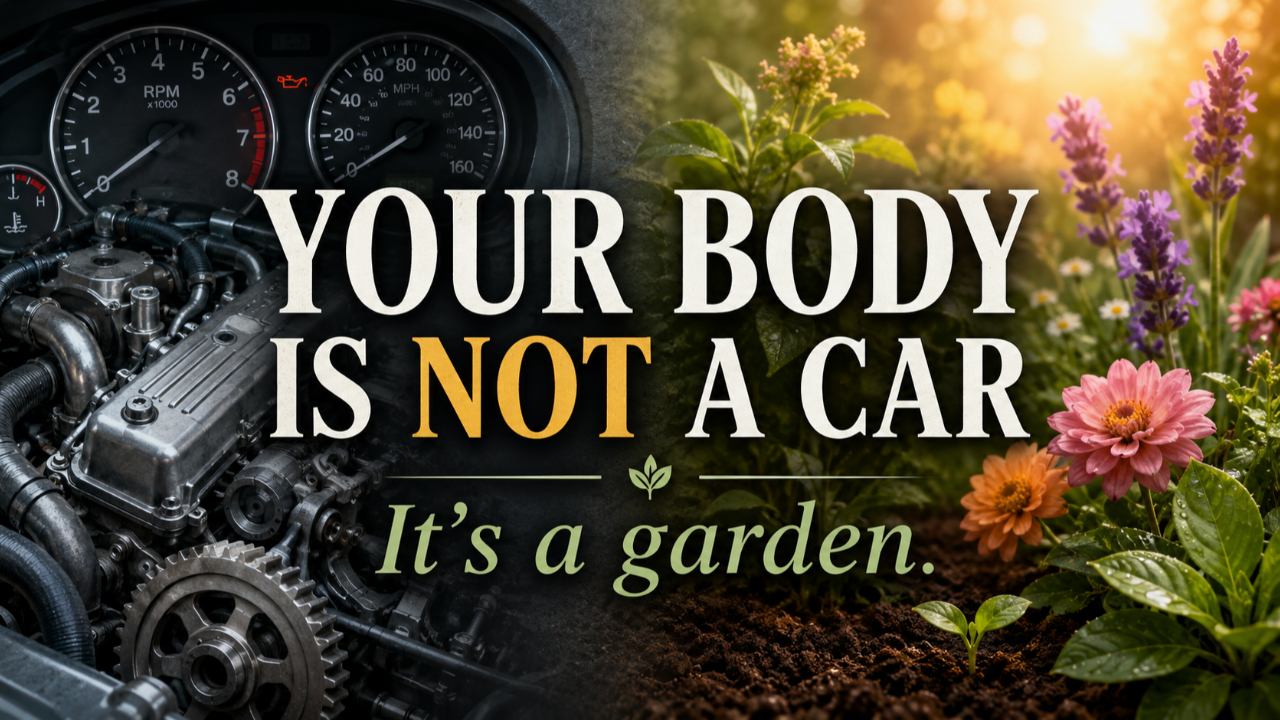
Your body is not a car.
I know this is inconvenient because the car metaphor is very popular. Something hurts, so we want to find the broken part. Replace it. Adjust it. Tighten it. Crack it. Medicate it. Stretch it. Diagnose it. Send it through the human equivalent of a mechanic shop and ask, “How long before I can drive this thing like I used to?”
And sometimes, sure, the body needs direct intervention. Bones break. Tissues tear. Infections happen. Surgeries are needed. Medications can be necessary. I am not here to pretend that every health issue can be solved with deep breathing, soup, and a positive relationship with your hamstrings. That is not healthcare. That is a Pinterest board with liability issues.
But the body is not a machine with isolated parts.
It is much more like a garden.
A garden can look like it is failing because one plant is wilting, but the problem may not be the plant alone. It may be the soil. The water. The sunlight. The drainage. The season. The pests. The weeds. The lack of space. The fact that someone keeps yelling motivational quotes at a tomato plant instead of checking whether it has enough nutrients.
The body works like that too.
Pain, sleep, digestion, mood, hormones, energy, inflammation, circulation, movement, and nervous system regulation are not separate little departments politely minding their own business. They influence each other constantly. Poor sleep can make pain louder. Pain can disrupt sleep. Stress can affect digestion. Digestion can affect mood. Hormones can influence energy. Inflammation can affect everything. A nervous system living in survival mode can make the whole body feel like it is bracing for impact, even when nothing obvious is happening.
This is why healing is rarely as simple as “fix the part that hurts.”
Sometimes the part that hurts is the loudest voice in a larger conversation.
That is one of the reasons I love acupuncture. Not because it is mystical in the way people sometimes imagine. Not because I think tiny needles are magical fairy wands that convince the body to become enlightened by Tuesday. Acupuncture is not magic.
But it is intelligent.
Or maybe more accurately, it works with the intelligence already present in the body.
That distinction matters to me. Acupuncture is not about forcing the body into submission. It is not about overpowering symptoms. It is not about treating the body like it is stupid, broken, or waiting for someone impressive enough to come along and tell it what to do. At its best, acupuncture helps create conditions where the body can begin to regulate again.
And that is a very different idea.
Because sometimes healing begins when the body finally receives a signal that it is safe enough to stop defending itself.
Think about that for a moment.
How many symptoms are connected to defense? Tight muscles defending against pain. Inflammation defending against threat. Anxiety scanning for danger. Insomnia refusing to let the system fully shut down. Digestive issues showing up when the body does not feel settled enough to receive, process, and release. Fatigue asking you to slow down because recovery has not matched output. Cravings reaching for fast relief because the system is undernourished, overstimulated, under-rested, or emotionally overloaded.
The body is always responding.
Sometimes the response is uncomfortable. Sometimes it becomes excessive. Sometimes the pattern gets stuck. But very often, the body is not doing something random. It is trying to protect you with the tools it has available.
The problem is that survival strategies are not always healing strategies.
A body that has been bracing for years may need help learning that it can soften. A nervous system that has lived on high alert may need repeated, trustworthy signals before it believes the emergency is over. A digestive system that has been living under chronic stress may not simply “calm down” because you told it to stop being dramatic. A person who has been running on pressure, caffeine, and denial may not repair deeply just because they finally bought magnesium and a sleep mask.
Again, rude but true.
The body needs consistency. It needs safety. It needs nourishment. It needs movement. It needs rest. It needs signals it can trust.
And this is where people often misunderstand healing. They think healing should happen because they decided they are ready. They think one good meal, one early bedtime, one treatment, one walk, one supplement, one moment of emotional clarity should be enough for the body to say, “Wonderful, we are healed now. Thank you for your participation.”
But the body is not petty, and it is not instantly convinced.
The body learns through repetition.
If you have spent months or years teaching your body that life is rushed, undernourished, overstimulated, sleep-deprived, emotionally unsafe, and physically tense, then one relaxing evening may feel nice, but it may not be enough to change the pattern. That does not mean the relaxing evening was pointless. It means healing is a relationship, and relationships are built through repeated trustworthy behavior.
Your body needs evidence.
Not perfection. Evidence.
Evidence that you are going to listen before it has to scream. Evidence that rest is not something you only allow after collapse. Evidence that food is not punishment or chaos, but nourishment. Evidence that movement is not a threat. Evidence that pain will be cared for instead of ignored. Evidence that your nervous system will not be forced to sprint through every day and then somehow fall asleep peacefully because you put on a calming playlist.
The body can remember stress.
But it can also remember safety.
That is the hopeful part.
The body has an inherent capacity to regulate, repair, adapt, and rebuild when given the right support. This does not mean healing is always easy. It does not mean every condition disappears. It does not mean we get to bypass reality with a nice affirmation and a cup of herbal tea. But it does mean the body is not just a fragile machine waiting to break. It is alive. Responsive. Adaptive. Constantly listening. Constantly adjusting. Constantly trying to maintain some version of balance, even when the conditions are not ideal.
Acupuncture steps into that conversation by giving the body a different kind of signal.
A treatment room is often the first place all day, maybe all week, where someone is asked to do less instead of more. They lie down. The lights soften. The breath changes. The body is touched with intention. Points are selected to communicate with the nervous system, circulation, pain pathways, digestion, stress response, and the larger patterns showing up in that person’s life. The needles are small, but the message can be surprisingly clear: you do not have to keep bracing in exactly the same way.
That is why someone might come in for shoulder pain and leave saying they slept better. Or come in for stress and realize their digestion changed. Or come in exhausted and notice their body finally took a deep breath. These things are connected because the body is connected.
The point is not that acupuncture is a miracle.
The point is that the body is an ecosystem.
And when one part of the ecosystem shifts, other parts may begin to respond.
This is also why acupuncture pairs so naturally with healthy habits. A treatment can help the body regulate, but the life outside the treatment room still matters. If someone leaves a deeply calming session and immediately returns to four hours of sleep, skipped meals, constant stress, no movement, and emotional chaos disguised as “just being busy,” the body may not be getting enough consistent evidence that anything has truly changed.
That does not make the treatment useless.
It means the treatment is part of a larger conversation.
Healing is often less about forcing the body and more about removing obstacles. Less about attacking symptoms and more about creating conditions. Less about demanding that the body perform health on command and more about asking, “What does this body need in order to remember how to regulate?”
Instead of asking, “How do I make this pain shut up?” we might ask, “What is keeping this tissue guarded?” Instead of asking, “Why am I so tired?” we might ask, “Where is my output exceeding my recovery?” Instead of asking, “Why is my digestion so sensitive?” we might ask, “Does my body feel safe enough to digest?” Instead of asking, “Why can’t I relax?” we might ask, “How long has my nervous system been practicing vigilance?”
That is not weakness.
That is intelligence.
The body keeps practicing what it has needed to survive. If it has needed tension, it practices tension. If it has needed hypervigilance, it practices hypervigilance. If it has needed shutdown, it practices shutdown. If it has needed cravings for quick relief, it practices cravings. If it has needed inflammation as defense, it practices inflammation.
The work is not to shame the body for what it learned.
The work is to teach it something new.
That takes time. It takes repetition. It takes care. It takes honesty. It takes support. It takes the humility to stop treating the body like an appliance and start treating it like a living system that has been paying attention this whole time.
And yes, this requires participation.
You knew I was going to say that.
A body cannot remember safety if your life keeps proving danger. A body cannot rebuild trust if you only listen when symptoms become impossible. A body cannot regulate deeply if your daily routine keeps pulling it back into depletion, overstimulation, undernourishment, and stress. Acupuncture can help create a signal. Nourishing food can help create a signal. Movement can help create a signal. Rest can help create a signal. Sunlight, connection, boundaries, sleep, hydration, breath, and consistency can all become signals.
The question is whether your body receives them often enough to believe them.
This is the part where healing becomes less dramatic and more honest.
Not glamorous. Not quick-fix sexy. Not the kind of thing that makes for an impressive before-and-after photo by next weekend. More like tending a garden. Remove what is choking the roots. Add nourishment. Improve the soil. Give it water. Protect it from harsh conditions when you can. Stop yelling at it for not blooming while keeping it in a closet.
The garden does not need your criticism.
It needs better conditions.
Your body is the same.
It may not need to be forced into healing. It may need fewer obstacles. Fewer mixed messages. Less punishment. More support. More rhythm. More safety. More nourishment. More movement that feels like life instead of penance. More rest that arrives before collapse. More signals that say, “We are not just surviving anymore.”
That is where the remembering begins.
Because the body can remember bracing, but it can also remember ease. It can remember pain, but it can also remember comfort. It can remember survival, but it can also remember repair. It can remember what it feels like to breathe deeply, sleep well, digest, move, recover, soften, and trust.
Sometimes healing is not about becoming a new person.
Sometimes it is about helping the body remember something it has been waiting to return to.
That is what acupuncture is really trying to do.
Not fix you like a broken machine.
Not override your body’s intelligence.
Not force healing through sheer will.
But offer a signal. Create a pause. Open a doorway. Help the system remember that regulation is possible.
And then we build from there.
Keep moving, eat something green, and question anything that sounds like a quick fix.
Chow! Chow!