No One Taught You How to Build a Healthy Life
Sep 15, 2026
Some people make healthy living look strangely effortless.
You know the type.
They pack their lunch without making it a whole emotional event. They go for walks like it is simply part of the day. They keep decent food in the house. They exercise regularly without needing to announce a full personal reinvention. They sleep at a reasonable hour. They own containers with matching lids, which already feels like a level of adulthood some of us were not properly briefed on.
They seem to know how to move through life with basic health rhythms in place.
Meanwhile, you are standing in the kitchen wondering how everyone else just knows how to do this.
How do people know what to buy at the grocery store?
How do they know what to cook when they are tired?
How do they exercise without turning it into punishment?
How do they go to bed before they are completely destroyed?
How do they make health look like a normal part of life instead of a dramatic lifestyle overhaul that requires a notebook, a motivational playlist, and the kind of optimism usually found in people who have not yet met Wednesday?
This is where a lot of people start to feel embarrassed.
Because they are intelligent. Capable. Hardworking. Thoughtful. Competent in other areas of life. They can manage jobs, families, businesses, schedules, crises, other people’s emotions, and an unreasonable number of passwords. They are not helpless.
And yet healthy habits feel weirdly foreign.
They know vegetables are good. They know movement matters. They know sleep is important. They know stress affects the body. They know drinking water is probably a better strategy than surviving on coffee, fumes, and stubbornness.
The problem is not that they know nothing.
The problem is that knowing is not the same as having a structure.
And for many people, that structure was never clearly taught, modeled, or practiced long enough to become normal.
This is the part we need to talk about more honestly.
Some people are not failing at habits.
They are learning what no one clearly taught them.
If you grew up in a home where movement, nutrition, rest, emotional awareness, and consistency were not part of daily life, then adulthood can feel like being asked to build a house without ever having seen a blueprint. Everyone keeps telling you to “just build better habits,” but no one stops to ask whether anyone ever showed you what a healthy life actually looks like in practice.
Not in theory.
In practice.
Because health is not just a set of facts. It is a rhythm. It is a culture. It is a series of repeated choices that become familiar because they were lived around you long enough to feel normal.
Some people grew up in homes where walks happened after dinner. Vegetables were part of meals. Sports, chores, outdoor play, or physical activity were fun. Bedtimes existed with a routine that did not just include brushing your teeth, but also a bath, cozy pajamas, and a story or song. Doctors and dentists were scheduled. Emotions could be named. Rest was allowed. Food was not treated as a battlefield, a reward, a punishment, or the only reliable source of comfort in the house.
Other people did not grow up with that.
Some people grew up with chaos. Financial stress. Exhaustion. Parents working multiple jobs. Addiction. Neglect. Diet culture. Emotional silence. “Clean your plate.” “Stop crying.” “We do not waste food.” “That is just how our family eats.” “We do not talk about feelings.” “Only rich people have time to exercise.” “Sleep when you’re dead.” “Being tired is normal.” “Pain is just part of getting older.” “Doctor visits only happen when something is obviously wrong.”
Some people inherited health structure.
Other people inherited survival structure.
And survival structure is very different.
Survival structure teaches you how to get through the day. It teaches you how to ignore your body, eat whatever is available, stay quiet about your needs, push through fatigue, tolerate discomfort, and not make a fuss. It teaches you to keep functioning even when you are not well.
That can be useful when survival is required.
But at some point, the same patterns that helped you get through life can start keeping you from living well.
This does not mean your parents failed you on purpose. This is not about blame for the sake of blame. Most families pass down what they know, what they can afford, what they have time for, what they were taught, and what they themselves never had the chance to question.
A lot of people were raised by people who were also surviving.
So this is not about sitting around forever pointing at childhood and saying, “Well, nobody taught me, so I guess I’m doomed.”
No.
That is not the point.
The point is clarity.
Because if no one taught you how to build a healthy life, then your struggle makes sense.
And if your struggle makes sense, you can stop wasting so much energy hating yourself for it.
That energy can be used for something better.
Learning.
I understand this personally because even though I grew up active and later became a college athlete, that did not mean I automatically knew how to build a healthy life as an adult.
I knew how to practice. I knew how to compete. I knew how to work hard. I knew how to push my body through drills, workouts, and long days. But knowing how to perform is not the same as knowing how to nourish yourself, regulate your nervous system, build sustainable routines, or understand what your body needs when no coach, team, or season is organizing your life for you.
In my early twenties, after I stopped playing volleyball and moved to Colorado, I started realizing I did not feel good. I had gained weight, lost muscle, felt achy, and was honestly shocked by how old I felt at twenty.
Twenty.
The age where your body is supposed to be made of elastic, optimism, and questionable decision-making.
I started moving more again once I got out of a desk job and began working outside at a golf course. Hiking helped. Walking helped. Being outside helped. My body started to feel more like my body again.
But food was another story.
At the time, I was dating a chef who cooked very rich food, drinking a pot of coffee before noon, and drinking plenty of wine at night. Truly, a wellness plan designed by chaos with a side of butter.
So, like many people do when they realize their lifestyle is catching up with them, I went on a detox.
And I felt better.
For about two weeks.
Then I went right back to the same patterns and, shocking no one, started feeling the effects again.
That was one of my first real lessons in the difference between a temporary reset and an actual structure. The detox showed me what was possible, but it did not teach me how to live. It did not teach me what to buy at the grocery store, how to build meals I would repeat, how to eat in a way that supported my energy, or how to make healthy choices feel normal instead of dramatic.
So I started learning.
I read books. I watched documentaries. I took nutrition courses. I experimented on myself with paleo, pescatarian, gluten-free, low carb, vegan, and eventually landed in something much closer to a Nutritarian style of eating: mostly whole, nutrient-dense plant foods that actually make my body feel clear, steady, and supported.
But that did not happen overnight.
More like ten years.
It was awkward. It was trial and error. It involved overcorrecting, rethinking, paying attention, and learning how to ask better questions than, “Will this make me look better?”
Questions like:
How do I feel after I eat this?
Do I have energy?
Is my digestion better?
Is my mood steadier?
Can I actually live this way?
Does this support the life I want, or is it just another short-term attempt to control myself?
That process taught me something I now believe deeply: a person can be intelligent, athletic, capable, and hardworking and still need to learn the basic practices of healthy living.
That is not embarrassing.
That is human.
This is the dialectic: yes, it may be harder for you because you are building from scratch. And yes, you can still build it.
Both things can be true.
You may not have inherited healthy routines, and you are not condemned to repeat that inheritance forever.
You may not have been taught how to cook, and you can make something delicious.
You may not have grown up moving your body for joy, and you can still discover movement that feels good.
You may not have seen adults rest without guilt, and you can still allow it.
You may not have learned emotional regulation, and you can still become someone who knows how to pause, breathe, name what is happening, and respond instead of react.
You may not have been given the blueprint.
But you are allowed to draw one now.
This matters because shame is a terrible teacher.
Shame says, “Why can’t you just do this?”
Curiosity says, “What was missing?”
Shame says, “Everyone else seems to know how.”
Curiosity says, “What do I need to learn?”
Shame says, “You should be further along by now.”
Curiosity says, “What would support the next step?”
That shift changes everything.
Because most people do not need another wellness influencer telling them to stop making excuses while filming themselves in a spotless kitchen next to a protein smoothie and a suspiciously calm puppy.
Most people need someone to help them slow down enough to see the source.
Maybe your home environment made unhealthy choices easier than healthy ones. Maybe food was modeled as comfort, control, convenience, guilt, or chaos instead of nourishment. Maybe movement was associated with punishment, competition, weight loss, or body shame. Maybe rest only happened after collapse. Maybe no one taught you how to notice stress until your jaw hurt, your stomach was off, your shoulders were up by your ears, or you were furious at a cabinet for having the audacity to exist.
The body often reveals what our lives taught us to ignore.
So part of building a healthy life is learning to listen sooner.
Not perfectly.
Sooner.
That does not remove responsibility. It makes responsibility more accurate. You cannot change what was modeled for you, but you can decide what becomes familiar now.
And that is what habits are: familiarity repeated long enough to become normal.
This is why “just make better choices” is such useless advice. Better choices need somewhere to live. They need an environment, a rhythm, a plan, and a way to recover when life interrupts.
If you were never taught how to shop, cook, move, rest, or care for yourself consistently, then these things may not feel like common sense at first. They may feel awkward, overwhelming, or strangely emotional.
That does not mean you are incapable.
It means you are building skills.
The problem is that many people respond to this learning curve by trying to fix everything at once. Food, movement, sleep, stress, relationships, routines, hydration, meal prep, meditation, strength training, and whatever else the internet has decided you are personally failing at this week.
No wonder people quit.
They try to build an entire life in one Monday.
That is not structure.
That is panic wearing running shoes.
A healthy life is not built by changing everything at once. It is built by creating a few reliable supports and letting them become familiar.
Start smaller than your ego wants.
Start with 1% improvement daily.
You do not have to rebuild your entire life in one dramatic burst of motivation. You only need to make one small improvement you can repeat.
One percent better is still better.
The change may feel almost too small to count at first. That is part of why it works. It is small enough to survive busy days, bad moods, unexpected problems, and the occasional Tuesday that arrives with unnecessary confidence.
Over time, the 1% improvements begin to compound.
The breakfast becomes familiar. The walk becomes part of the week. The bedtime boundary becomes easier to protect. The grocery rhythm reduces decision fatigue. The calmer space gives your nervous system somewhere to land.
You are not trying to transform overnight.
You are transforming over months, with incremental modifications, and doing so with a process that is sustainable and reasonable. Therefore, it can become permanent.
You are not relying on giant declarations, all-or-nothing plans, or punishment. You are making changes you can actually maintain, until caring for yourself becomes a normal part of your life.
And yes, it will feel awkward at first.
Of course it will.
Anything you were not taught feels awkward before it becomes natural.
The first time you cook a new meal, it takes too long and uses every pan you own for reasons no one can explain. The first time you go to a fitness class, you may feel like everyone else received choreography instructions from a secret council. The first time you try to go to bed earlier, your brain may suddenly decide it is the perfect moment to review every embarrassing thing you have done since 1997.
Learning is not always graceful.
But awkward does not mean wrong.
Awkward often means new.
This is why compassion matters. You cannot shame yourself into consistency. You build healthy habits through practice, repetition, support, mistakes, and starting again.
You learn what gives you energy, what drains you, what helps you sleep, what movement you enjoy, and what routines your real life can hold.
That is not childish. It is adult work. And it takes courage to look at what you inherited and say, “This may explain me, but it does not have to define me.”
You may not have been given the structure you needed, but you can build it now.
Start small. Keep fruit on the counter. Take a walk after dinner. Learn three simple meals. Go to bed a little earlier. Move because your body deserves strength, circulation, and joy. Speak to yourself with enough respect to keep going.
These choices may seem small, but repeated choices become routines. Routines become a way of life.
The goal is not perfection. It is support: food, movement, rest, relationships, and an environment that help you care for yourself consistently.
So stop asking, “Why can’t I just be better at this?”
Ask instead:
What was I never taught, and what am I ready to build?
You are not failing at habits. You are learning what no one handed you.
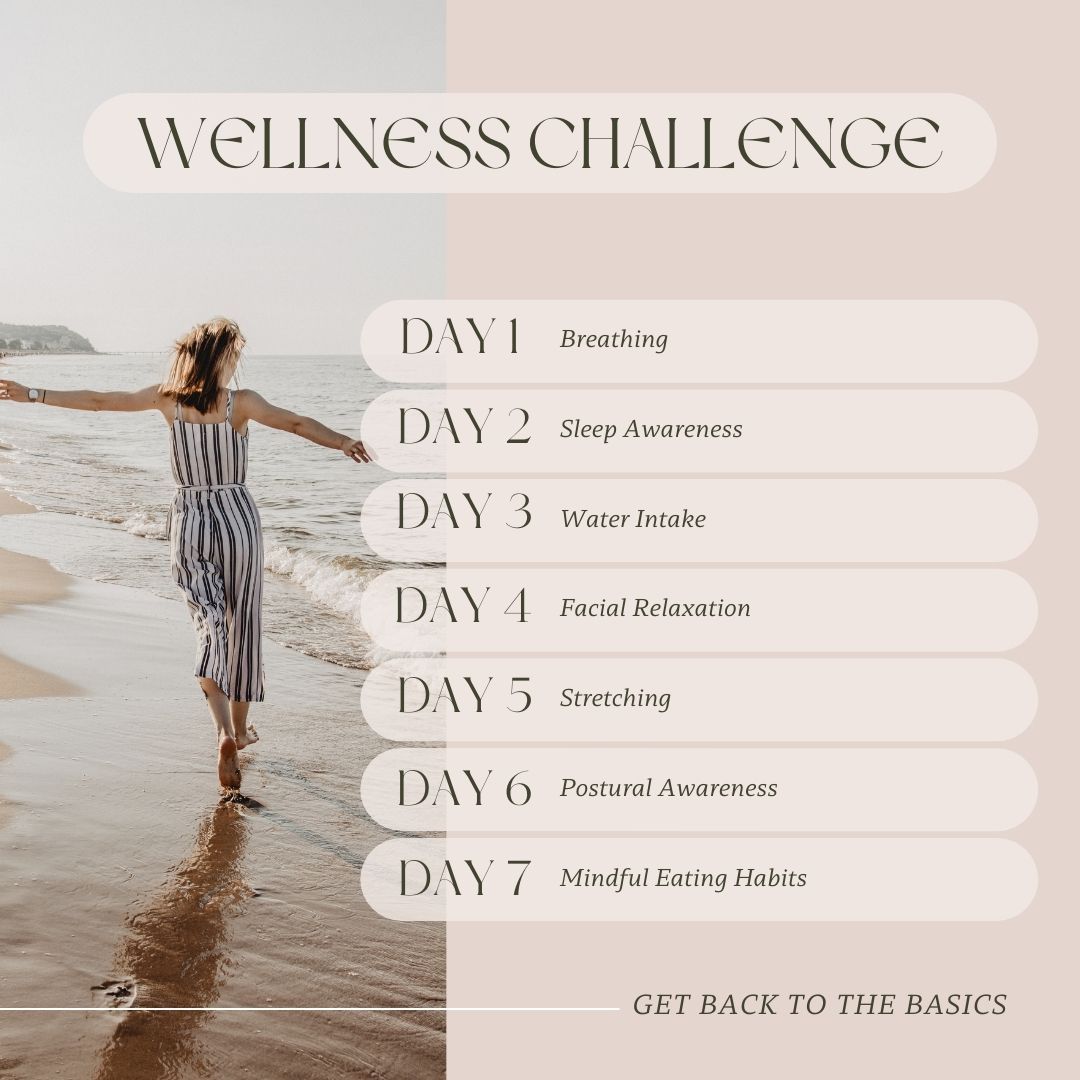
Now take the next step: join the 7-Day Wellness Challenge or enroll in the free course, Revitalize Your Wellness. You do not have to change everything today. Just begin with one supported choice.
Keep moving, eat something green, and question anything that sounds like a quick fix.
Chow! Chow!